The Best Storage Bins for Small Apartments
If you live in a small apartment, you know the cruel math: every square foot has to earn its keep, and "just toss it in the closet" stops working about two weeks after move-in. The right bins can double your usable space — the wrong ones just become expensive clutter you have to step over.
In this guide, you'll learn how the six main types of storage bins compare for small-apartment life, what to use where, how to measure before you buy (the step everyone skips), and budget picks for each category. No brand names, no retailer links — just practical buying knowledge.
Why Small Apartments Need a Different Bin Strategy
In a house, storage is mostly about volume. In a 500-square-foot apartment, it's about geometry: a bin that doesn't fit under your bed, inside your closet, or on your shelf is just a box in the way. The best storage bins for small apartments share three traits:
- They fit standard small-space slots — closet shelves, under beds, cubby shelving units, and the gaps between furniture and walls.
- They stack or nest — empty bins that nest inside each other save space when you're not using them.
- They earn double duty — a basket attractive enough to sit on an open shelf pulls its weight twice.
Keep those three traits in mind as you read on.
The 6 Types of Storage Bins, Compared
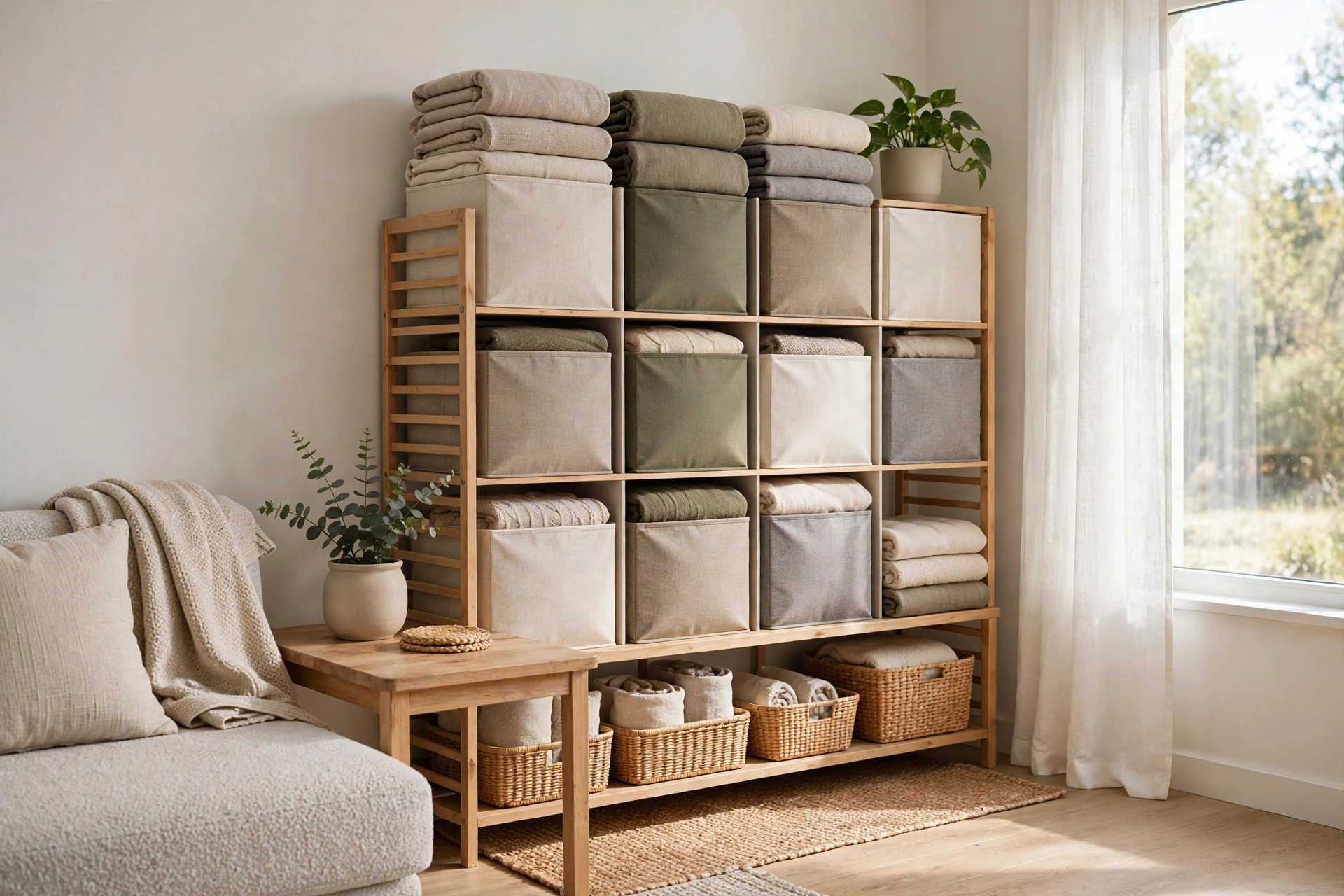
1. Fabric Storage Cubes
Soft-sided cubes for cubby-style shelving. Best for clothing, linens, and everyday items you grab often but want out of sight.
Pros: Cheap in multipacks, lightweight, and they collapse flat. They hide visual clutter on open shelving instantly.
Cons: No lid means dust settles on contents. Soft sides sag under heavy items, and fabric absorbs odors — skip them for damp closets.
What to look for: Reinforced fabric with sewn-in stiffening and sturdy handles. Measure cubby openings first — "standard" sizes vary, and a quarter inch matters.
2. Lidded Plastic Bins
Hard plastic tubs with snap-on or hinged lids. Best for seasonal items, decorations, paperwork, and keepsakes — things you access a few times a year.
Pros: Lids keep out dust, moisture, and pests — a real concern in older buildings. Stackable, sturdy, and easy to wipe clean.
Cons: Opaque tubs become mystery boxes within a year. Bulky when full, and cheap lids crack or warp.
What to look for: A lid that latches or snaps — friction-fit lids pop off in stacks. Smooth interior walls, and handles molded into the body.
3. Under-Bed Bins
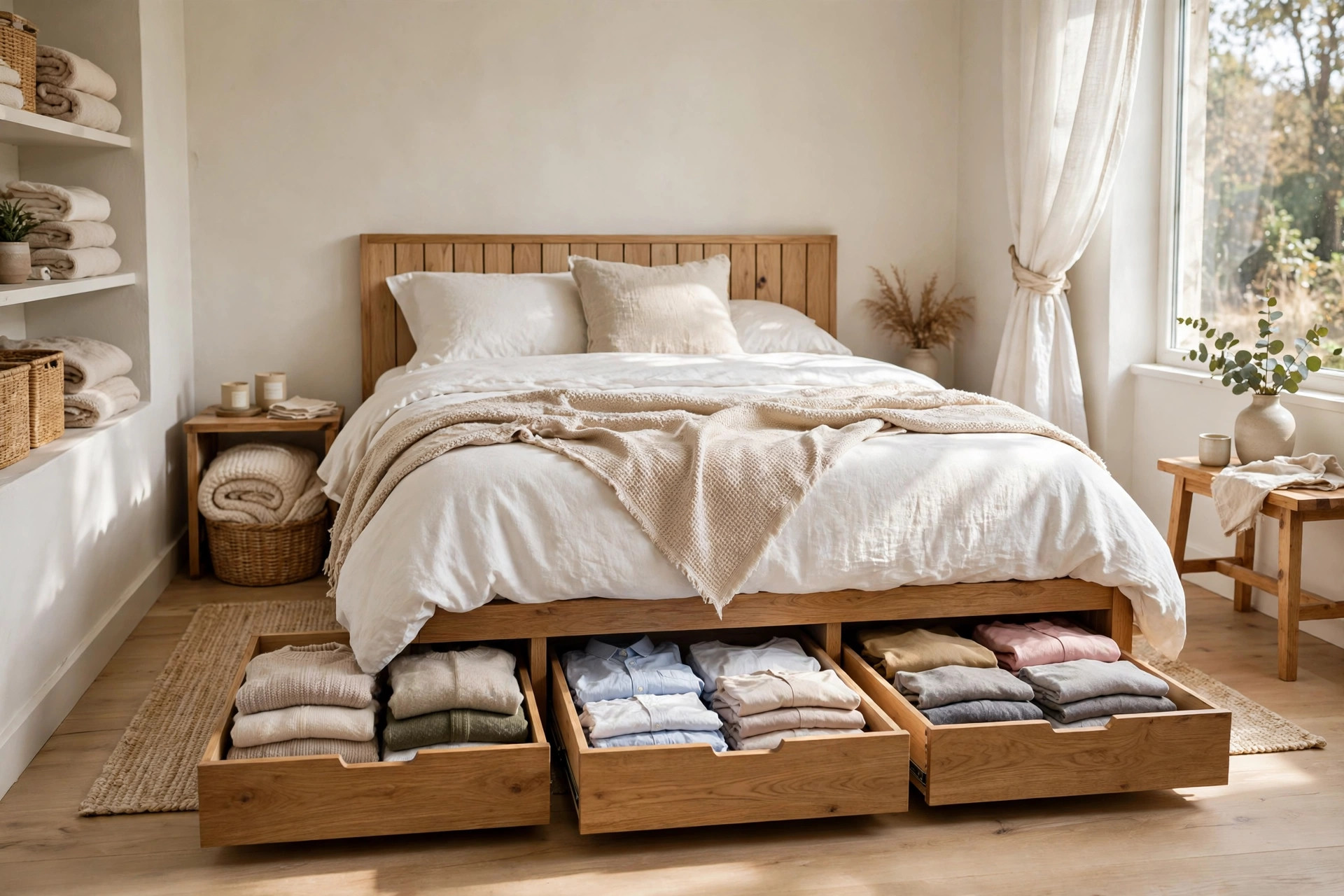
Low, wide containers for the dead space under your bed — square footage you're already renting but probably wasting. Best for shoes, off-season clothing, and spare bedding.
Pros: They exploit space that costs you nothing extra. Low height means you see everything at a glance — nothing vanishes at the bottom.
Cons: They collect dust fast without lids. Cheap versions lack wheels and scrape floors. Most frames offer only six to eight inches of clearance, so sizing is unforgiving.
What to look for: Wheels or smooth glides, a fitted lid, and a height that clears your frame by at least half an inch. Measure clearance in three spots — frames sag in the middle.
4. Stackable Clear Bins
Transparent plastic bins designed to stack. Best for pantries, bathroom cabinets, and craft supplies — anywhere you need to find things fast.
Pros: You see the contents without opening or labeling anything. Interlocking lids make stacks stable, and they're ideal for deep cabinets.
Cons: You see everything, including the mess — clear bins punish sloppy packing. Pricier per unit than opaque tubs, and cheap plastic yellows in sunlight.
What to look for: Matching sets with interlocking lids, and slightly tapered walls so empties nest. Keep them out of direct sun.
5. Decorative Baskets
Woven, wire, or felt baskets that sit out in the open. Best for living rooms and entryways — throws, remotes, dog toys, mail. Storage that doesn't look like storage.
Pros: They look good on open shelves and floors, solving the no-hidden-storage problem. Lightweight, portable, and warmer than plastic.
Cons: No lid, so dust and pet hair are constant companions. Woven baskets snag delicate fabrics. Among the priciest options per cubic inch — you're paying for looks.
What to look for: Baskets sized to your actual shelf or floor spot. Tight weaves hold small items better than loose, chunky ones.
6. Vacuum Storage Bags
Sealable bags you compress with a vacuum to shrink bulky soft goods. Best for puffy winter coats, comforters, and spare pillows — the bulky items that eat a small closet alive.
Pros: Unbeatable space savings for soft, bulky items — a compressed comforter can free an entire shelf. Cheap, and they protect against dust, moisture, and moths.
Cons: A hassle for anything you access often; resealing is a chore. Over-compressing delicate fabrics can damage them. Bags develop slow leaks over time, so check seals yearly.
What to look for: Double-zip seals and a one-way valve that fits a standard vacuum hose. Buy a variety of sizes rather than one giant bag.
How to Choose: Measure First, Buy Second
Every bad bin purchase in a small apartment traces back to skipping the tape measure. Before you buy:
- Measure the slot, not the room. Record the interior height, width, and depth of the exact shelf, cubby, or under-bed gap — plus obstructions like shelf brackets.
- Subtract breathing room. Leave at least half an inch of clearance on every side. Bins that wedge in when empty get stuck once loaded.
- Match the bin to access frequency. Opened weekly? Choose open or easy-access. Opened twice a year? Lidded and labeled.
- Standardize where you can. Same-footprint bins stack better and look calmer. Buying a set for a whole closet wastes less space than mixing mismatched bins.
- Check the weight. You'll carry bins up stairs and across rooms — favor medium sizes over maximum sizes.
Mistakes to Avoid
- Buying bins before decluttering. Bins organize what you keep; they don't decide what stays. Sort and purge first — you'll usually need fewer bins than you thought.
- Choosing opaque bins for frequently used items. If you open it weekly and can't see inside, you'll stop putting things back. Visibility beats tidiness for everyday items.
- Skipping lids. A bin without a lid in a dusty apartment becomes a bin full of dust. Lids aren't optional for anything stored more than a few weeks.
- Overstacking. Anything above comfortable reaching height becomes dead storage — or a hazard. Keep daily items between knee and eye level, and never stack more than three or four high.
- Mixing categories in one bin. "Miscellaneous" bins are where organization goes to die. One bin, one category, one label.
Budget Picks by Category
A sensible approach per category:
- Fabric cubes: The cheapest option overall — multipacks bring the per-cube price to a few dollars. Prioritize reinforced sides over fancy patterns.
- Lidded plastic bins: Mid-range; price rises with size and lid quality. Buy fewer, better-lidded mediums instead of flimsy larges.
- Under-bed bins: Budget-friendly, especially soft-sided versions with lids. Wheeled hard versions cost more but last longer on hard floors.
- Stackable clear bins: The priciest per unit here — reserve them for spots where visibility pays off (pantry, bathroom) and use cheaper opaque bins elsewhere.
- Decorative baskets: Spend only for visible rooms. A couple of good-looking baskets in the living room do more than a dozen hidden in closets.
- Vacuum bags: The highest space-savings per dollar of anything here. A multipack covers a seasonal swap for very little.
A reasonable starter kit for a one-bedroom: fabric cubes for the closet, two or three lidded bins for seasonal items, one or two under-bed bins, and a pack of vacuum bags.
Frequently Asked Questions
What size storage bins work best for small apartments?
Medium bins you can lift comfortably when full. Oversized bins are hard to maneuver through narrow hallways and miserable to pull from high shelves. When in doubt, go smaller and buy two.
How do I keep bins from looking cluttered in a studio?
Standardize. Bins in one or two matching colors and consistent sizes read as intentional design; mismatched tubs read as clutter.
Are fabric bins or plastic bins better for closets?
Fabric cubes suit everyday clothes and linens you grab often — they're light and collapse flat. Plastic lidded bins suit the top shelf and long-term storage, since they block dust and moisture. Many closets work best with fabric below and plastic above.
Do I really need to measure before buying storage bins?
Yes — it's the highest-value step in this guide. Apartment shelves, cubbies, and bed frames vary by inches, and bins don't compress. Five minutes with a tape measure prevents the bin that almost fits.