Cleaning Supplies Organization: Closet, Caddy & Small-Space Setups
If your cleaning supplies are scattered across three bathrooms, the laundry room, and a graveyard of half-used bottles, you're not disorganized — you're just missing a system. In this guide, you'll learn how to build one portable cleaning caddy that carries everything you need, how to set up a cleaning closet or cabinet that stays tidy, where to stash overflow in a small space, how to decant bulk buys without making a mess, how to store everything safely away from kids and pets, and how to declutter with a "use what you have" approach. All of it budget-first, using bins and baskets you probably already own.
Build Your Cleaning Caddy: The Whole Home in One Handle
A portable caddy is the single best upgrade for cleaning supplies organization, especially in a small home. Instead of making four trips to gather supplies, you grab one handle and carry everything room to room — and you only need one set of basics instead of duplicates scattered everywhere.
What Goes in the Caddy
- All-purpose cleaner — one bottle that does most of the work
- Bathroom cleaner or a second all-purpose spray, depending on preference
- Glass cleaner
- Dish soap — doubles as a gentle cleaner for many surfaces
- Baking soda and white vinegar — the budget duo for scrubbing, deodorizing, and freshening
- Microfiber cloths (3–4) — one for wet work, one for dry/dusting, plus spares
- A scrub brush and an old toothbrush for grout and tight spots
- Rubber gloves
- Small trash bags for quick room resets
- A notepad or your phone's notes app for jotting what runs low
If you haven't touched a product in a month, it doesn't earn a spot in the caddy — it can live in storage (more on that below).
Picking the Caddy Itself
Any sturdy container with a handle works: a dollar-store tote, a repurposed shower caddy, a small plastic toolbox. Look for one that can survive an occasional spill and is easy to wipe out. No compartments? Tuck a couple of small cups or jars inside to corral brushes and cloths.
Keep the caddy in one consistent home base — a hall closet shelf, the laundry room, or under a bathroom counter — so you never hunt for it.
Set Up a Cleaning Closet or Cabinet
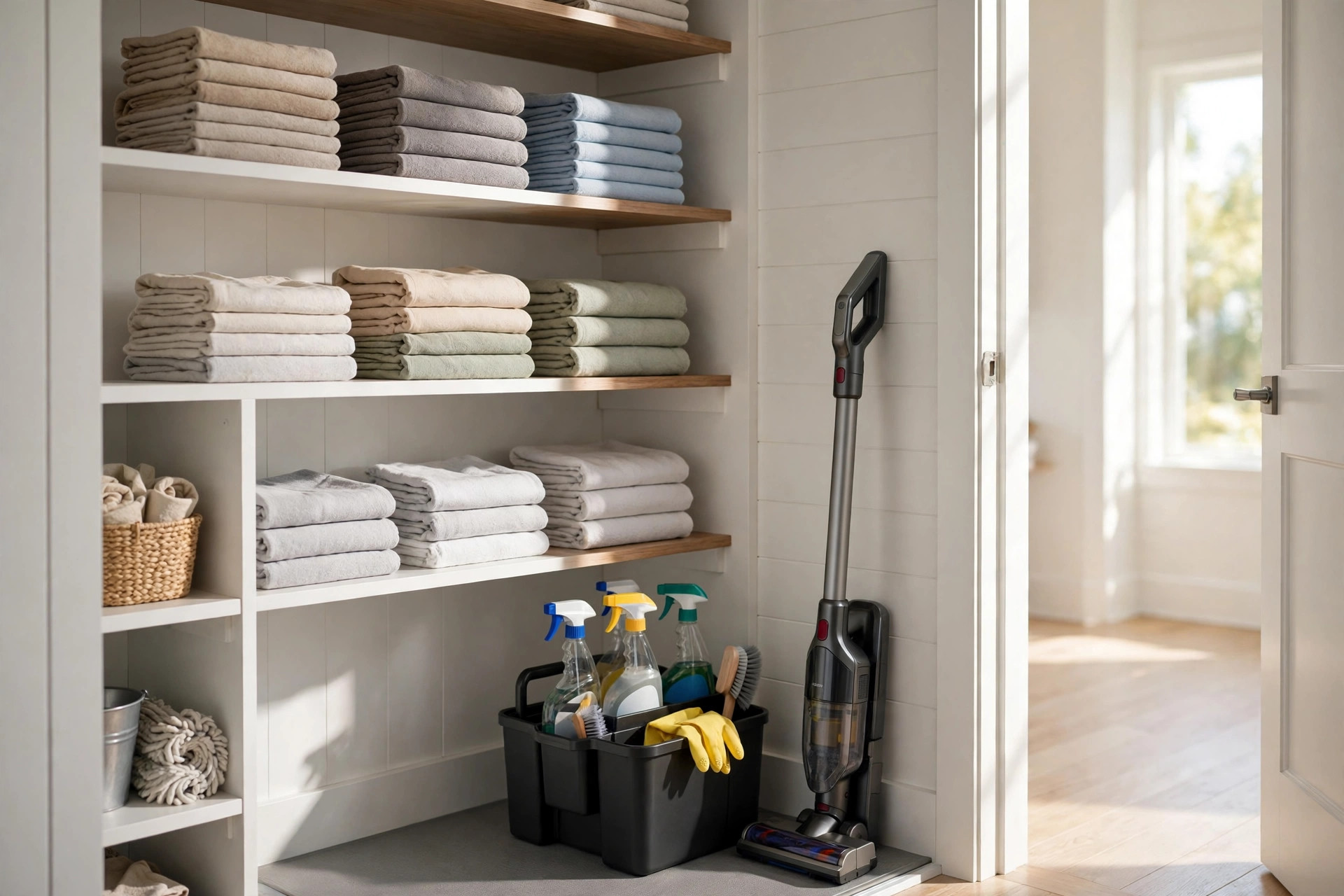
Even with a caddy doing the daily work, bulk refills, specialty products, and equipment need a home. A dedicated cleaning zone — a closet, a cabinet, or even a single shelf — keeps them out of the way but within reach.
The Zone Method
Divide your storage space into zones so anyone in the household can find things and put them back:
- Daily drivers: the caddy lives here, ready to grab.
- Refills and bulk: extra sponges, paper towels, and refill bottles of your most-used cleaners.
- Specialty items: grout cleaner, upholstery spray, wood polish — things you use a few times a year.
- Tools: vacuum attachments, dusters, extra mop heads, lint rollers.
Use baskets or bins you already have to define each zone. Shoeboxes with the flaps cut off work fine as shelf bins. Label them with masking tape and a marker so the system survives houseguests, kids, and forgetful partners.
Small-Space Closet Tricks
No linen closet to spare? You still have options:
- The back of a door: an over-the-door organizer holds spray bottles, gloves, and cloths without taking a single inch of shelf space.
- A narrow rolling cart: a slim cart slides into the gap between the washer and the wall or beside the fridge, adding three tiers of storage in a tiny footprint.
- High shelves: bulk refills and rarely used items go up high; the caddy and daily products stay at arm's reach.
- Under a bathroom sink or in a laundry cabinet: reserve one shelf or bin as your cleaning station, separate from toiletries.
Handle the Under-Sink Overflow
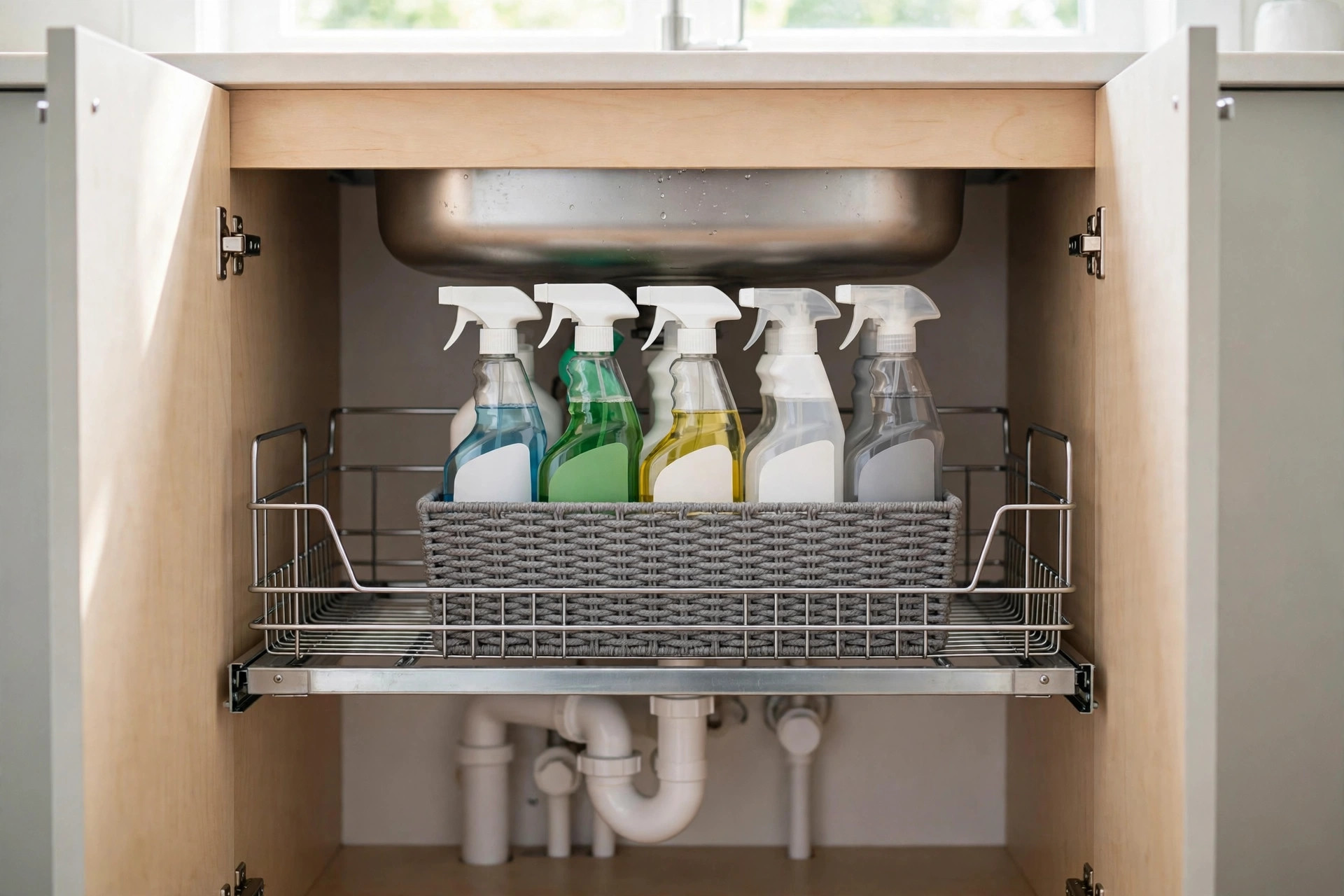
This article won't repeat the full under-the-kitchen-sink playbook (that's covered elsewhere), but one rule matters for whole-home storage: the under-sink area should not be your only cleaning storage. If bottles are piling up there, move overflow into your cleaning closet zones instead.
A simple rule: under the sink holds only what you use in the kitchen (dish soap, trash bags, one all-purpose spray). Everything else moves to your central cleaning zone.
Decant Bulk Buys the Smart Way
Buying the big refill jug saves real money, but wrestling a gallon jug every time you wipe a counter is a fast way to get drips everywhere. Decanting — pouring bulk products into smaller working bottles — is the budget fix.
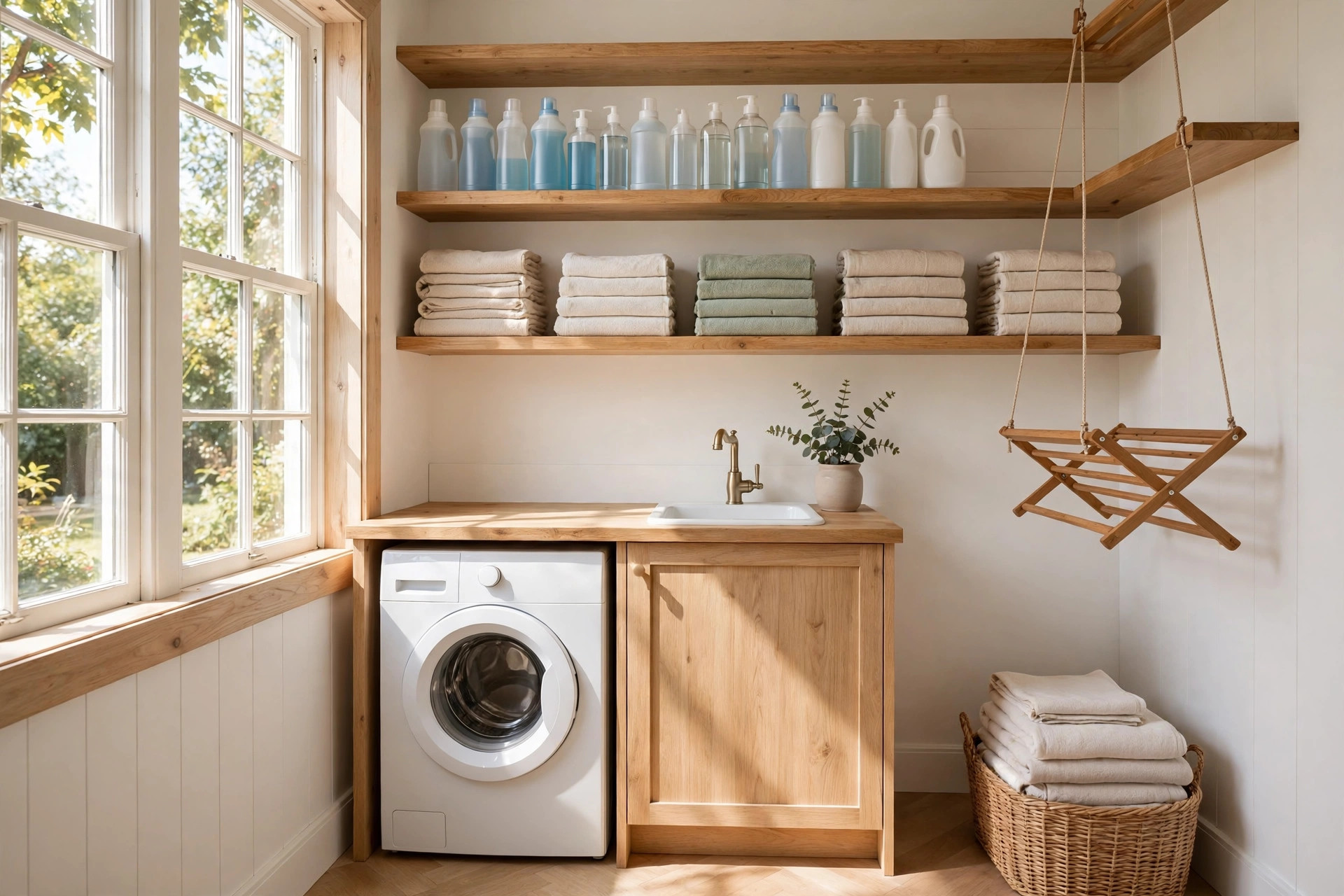
- Keep one working spray bottle per product in your caddy or under the sink; store the big refill jug in your cleaning closet.
- Use a funnel to avoid spills, and pour slowly.
- Label every decanted bottle with the product name. A strip of masking tape and a marker takes ten seconds and prevents mystery-bottle accidents.
- Never reuse a bottle for a different product without washing it out thoroughly and relabeling — and never mix products in one bottle.
- Keep the original bulk jug accessible for its safety information, or tape the key label details to your working bottle.
Refill bottles you already own rather than buying new spray bottles. Most trigger sprayers last through many refills.
Store Safely Away From Kids and Pets
Cleaning products need to be stored where curious hands and paws can't reach them:
- Store products up high or behind a latched door if you have young children or pets. Simple adhesive child-safety latches cost a few dollars and install in minutes.
- Keep products in their original containers (or clearly labeled working bottles) so nothing is mistaken for something else.
- Never store cleaning products near food, pet food, or pet treats — separate cabinets or shelves entirely.
- Close bottles and caddies after use and return the caddy to its home base; most mix-ups happen with products left out on counters.
- Ventilate when you clean by opening a window or running a fan, and follow the directions on each product label.
These are general storage habits, not a substitute for reading your products' own safety instructions.
Declutter With a "Use What You Have" Reset
Before buying a single organizer, gather every cleaning product in the house into one spot. This is your declutter round.
- Group duplicates. Three half-used all-purpose sprays? Pick one favorite to use up first.
- Toss the dead weight. Dried-out wipes, empty bottles, and anything expired go to recycling or trash (check your local rules for hazardous disposal).
- Finish the half-used bottles. Commit to using what you already own before buying anything new. Put the almost-empty bottle in your caddy so it actually gets used.
- One in, one out. A new product only enters the house when an old one is finished. This single rule prevents the graveyard from rebuilding itself.
Most people find they already own everything they need — the "mess" was just duplication.
A Simple Routine to Keep It Working
A system only works if it's easy to maintain. Once a week, when you finish cleaning:
- Wipe out the caddy and toss used cloths in the laundry.
- Glance at supply levels — anything running low goes on the shopping list now, not mid-cleaning next week.
- Return stray products to their zones.
That two-minute reset is the whole maintenance plan. When everything has a home and there's only one of each product, staying tidy takes almost no effort.
Frequently Asked Questions
How many cleaning products do I actually need?
For most homes, an all-purpose cleaner, bathroom cleaner, glass cleaner, dish soap, baking soda, and white vinegar cover nearly everything. Start with the basics and add only what you genuinely use.
Where should I store cleaning supplies in a small apartment?
Give your caddy one consistent home base (a closet shelf, laundry area, or cabinet), and keep bulk refills on a high shelf or in a slim rolling cart tucked into a narrow gap.
How do I keep kids and pets away from cleaning supplies?
Store products up high or behind latched cabinet doors, keep them in clearly labeled original containers, never store them near food or pet food, and always put the caddy away after cleaning.
Is it okay to pour bulk cleaners into smaller bottles?
Yes — decanting is a great budget move. Use a funnel, label every bottle, never mix different products in one bottle, and keep the original packaging handy for safety information.
What should I do with half-used bottles I don't like?
Use them up in low-stakes jobs like trash cans or outdoor furniture, give unopened ones to a friend or neighbor, and dispose of anything unusable per your local hazardous waste rules.