Holiday Organizing: The Order That Saves Time and Money and Lowers Fire Risk
November is the month when the holiday season stops being an idea and starts being boxes, bins, lights and guests. The order you do things in matters, and so does the safety check that comes before a single decoration goes up. This guide to holiday organizing decor safety follows that order: sort first, check the lights, then store keepsakes safely.
The spending picture this year is strong on paper and cautious underneath. The National Retail Federation forecasts retail sales in November and December 2026 will grow 4.2 percent over 2025, to total spending of $1.013 trillion. That is a forecast, published 15 October 2026, not money already spent. Last year's holiday sales rose 3.1 percent over 2024, totaling $972 billion. If the forecast holds, it would be the first holiday season above $1 trillion in NRF's measure, but NRF itself does not make that claim in its release, so treat it as arithmetic, not as the federation's announcement.
What shoppers plan to spend
The NRF forecast covers the season from 1 November through 31 December. Its calculation excludes automobile dealers, gasoline stations and restaurants, to focus on core retail. The forecast is based on economic modeling using consumer spending, disposable personal income, employment, wages, inflation and previous monthly retail sales releases.
NRF expects retailers to hire between 325,000 and 375,000 seasonal workers, in line with last year's estimated 356,000 seasonal jobs. The caution behind the forecast is familiar: higher gas prices, persistent inflation, higher interest rates and elevated consumer debt.
NRF chief economist Mark Mathews said inflation, rising gas prices and pressure on household spending "will affect consumers differently across income groups."
What people actually plan to spend looks tighter than the headline forecast. NerdWallet's 2026 Holiday Spending Report, updated 13 October 2026, finds Americans planning to buy gifts expect to spend $879 on average, down 21 percent from $1,107 on average in 2025. Most Americans, 82 percent, plan to buy gifts this holiday season. Total expected spending for holiday spenders is $2,525 on average, covering gifts, travel and other holiday expenses.
Travel plans are also softer. About 2 in 5 Americans, 42 percent, plan to spend money on flights and hotels during the holidays, down from 45 percent in 2025. These are planned spending figures from a survey, not observed spending. The survey was conducted online in the United States by The Harris Poll on behalf of NerdWallet from 8 to 10 September 2026, among 2,060 US adults ages 18 and older.
The practical point is simple: a big season is forecast, but the average gift buyer plans to spend less than last year. Sorting what you already own before buying more is the cheapest way to close that gap.
The fire risk in the decorations
December is a leading month for US home fires, and decorations are part of the reason. The National Fire Protection Association reports that, as an annual average between 2020 and 2024, US fire departments responded to an estimated 835 home structure fires that began with decorations, excluding Christmas trees. Those fires resulted in three civilian fire deaths, 29 civilian fire injuries and $18 million in direct property damage.
Nearly half of these decoration fires, 47 percent, occurred because the decorations were too close to a heat source, such as a candle or other heat-producing equipment. That is the single fact that should shape how you decorate: distance from heat matters more than anything else.
Christmas tree fires are counted separately, and they are deadlier per fire. US fire departments responded to an average of 143 home fires that started with Christmas trees, resulting in an estimated seven civilian deaths, 13 civilian injuries and $15 million in property damage. Nearly one in four Christmas tree fires, 24 percent, were started by lamps or bulbs. 11 percent were started by candles. Electrical distribution or lighting equipment was involved in 40 percent of home Christmas tree fires.
Candle fires peak in December and January. 12 percent of candle fires occur in December and 10 percent occur in January. On average, 20 home candle fires are reported each day, a figure the US Fire Administration attributes to NFPA. Christmas Day and Christmas Eve were the second and third leading days of the year for home cooking fires, respectively, in 2024.
"Many of the activities we engage in during the holiday season reflect leading causes of home fires, which explains why we consistently see the number of home fires climb at this time of year," said Lorraine Carli, vice president of Outreach and Advocacy at NFPA.
The order that works: sort, guest space, gifts, storage
The sequence below comes from professional organizers, in a Closets by Design piece distributed by Stacker. It is practical advice, not a researched finding, and no part of it is a statistic. The order is: sort storage first, then make the guest space sleepable, then manage gifts and new toys, then store everything properly when the season ends.
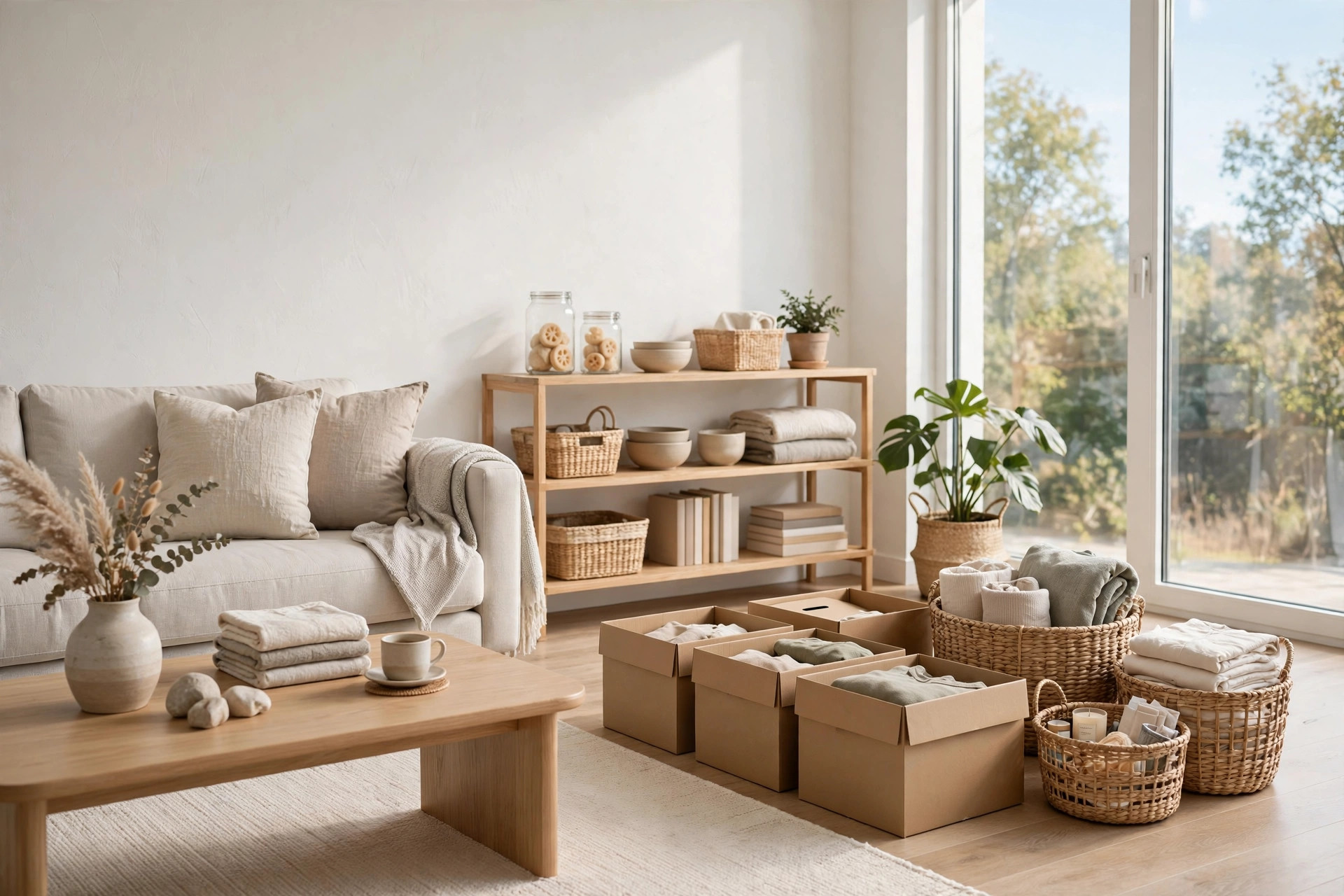
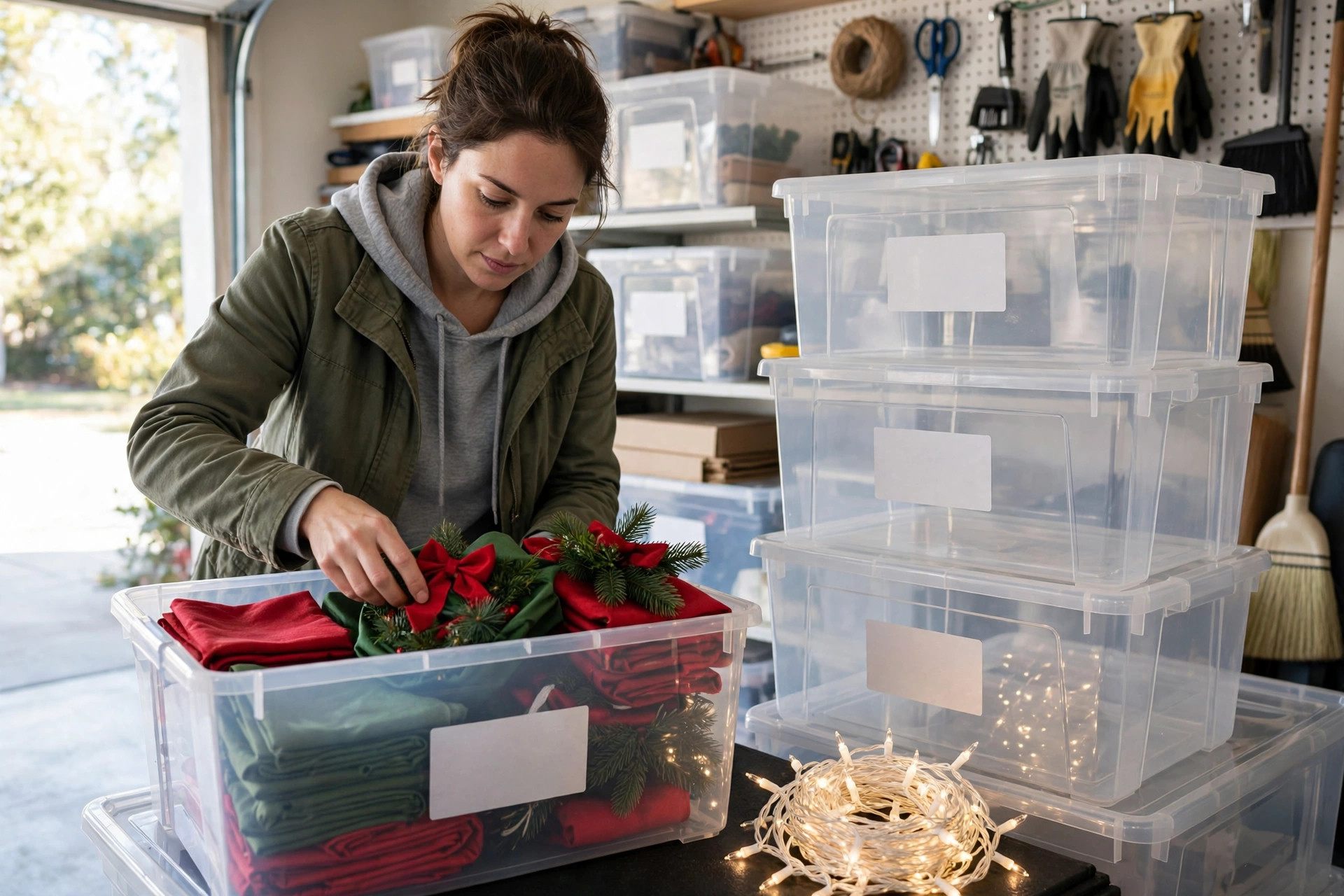
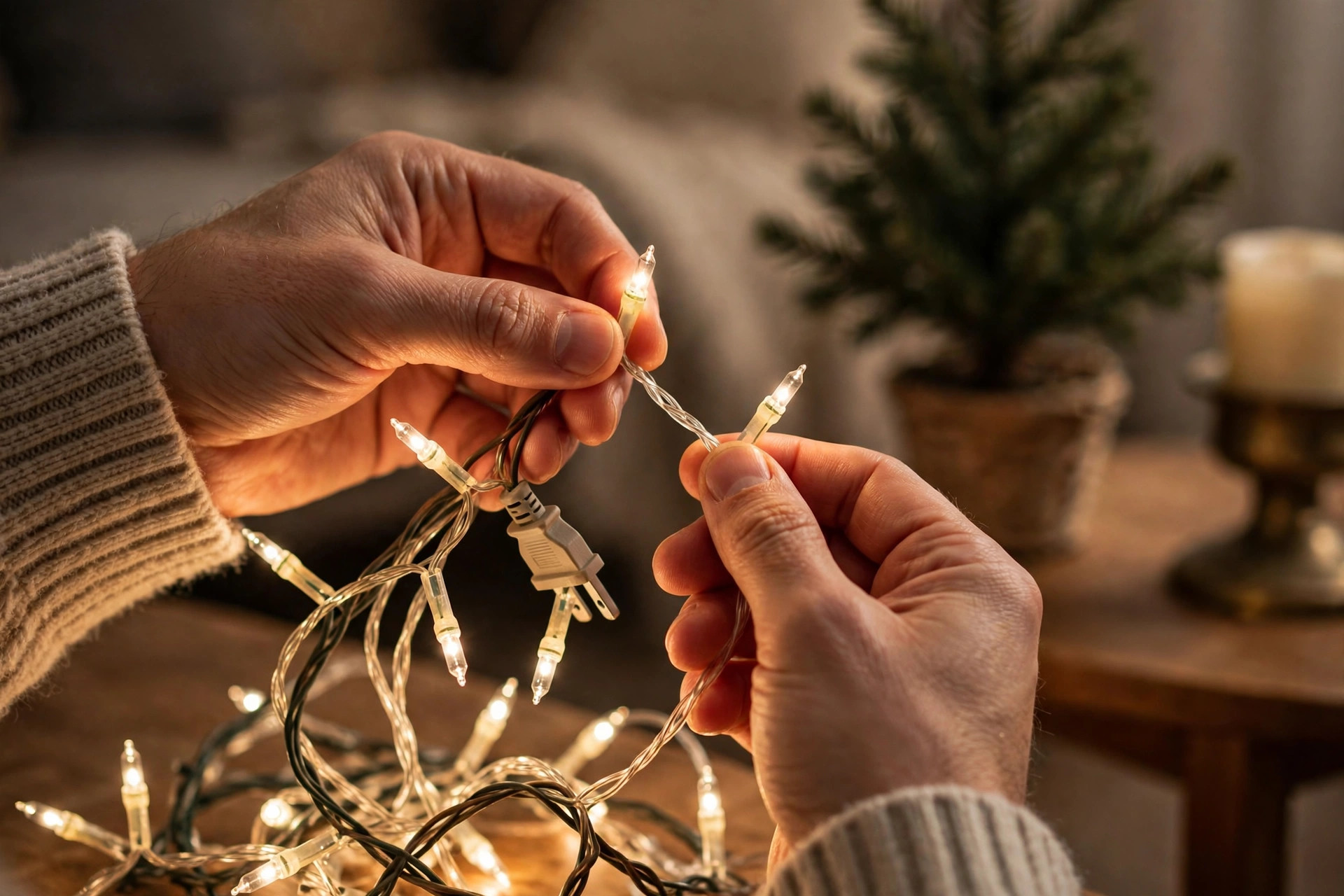
First, inspect and sort before decorating. Sort every decoration bin before anything goes up, and inspect every light string first. The US Fire Administration says to inspect holiday lights each year before you put them up, and throw away light strands with frayed or pinched wires. Sorting first means you buy only what you are actually missing, and it means broken lights never make it onto the tree. See also our pre-holiday decluttering checklist.
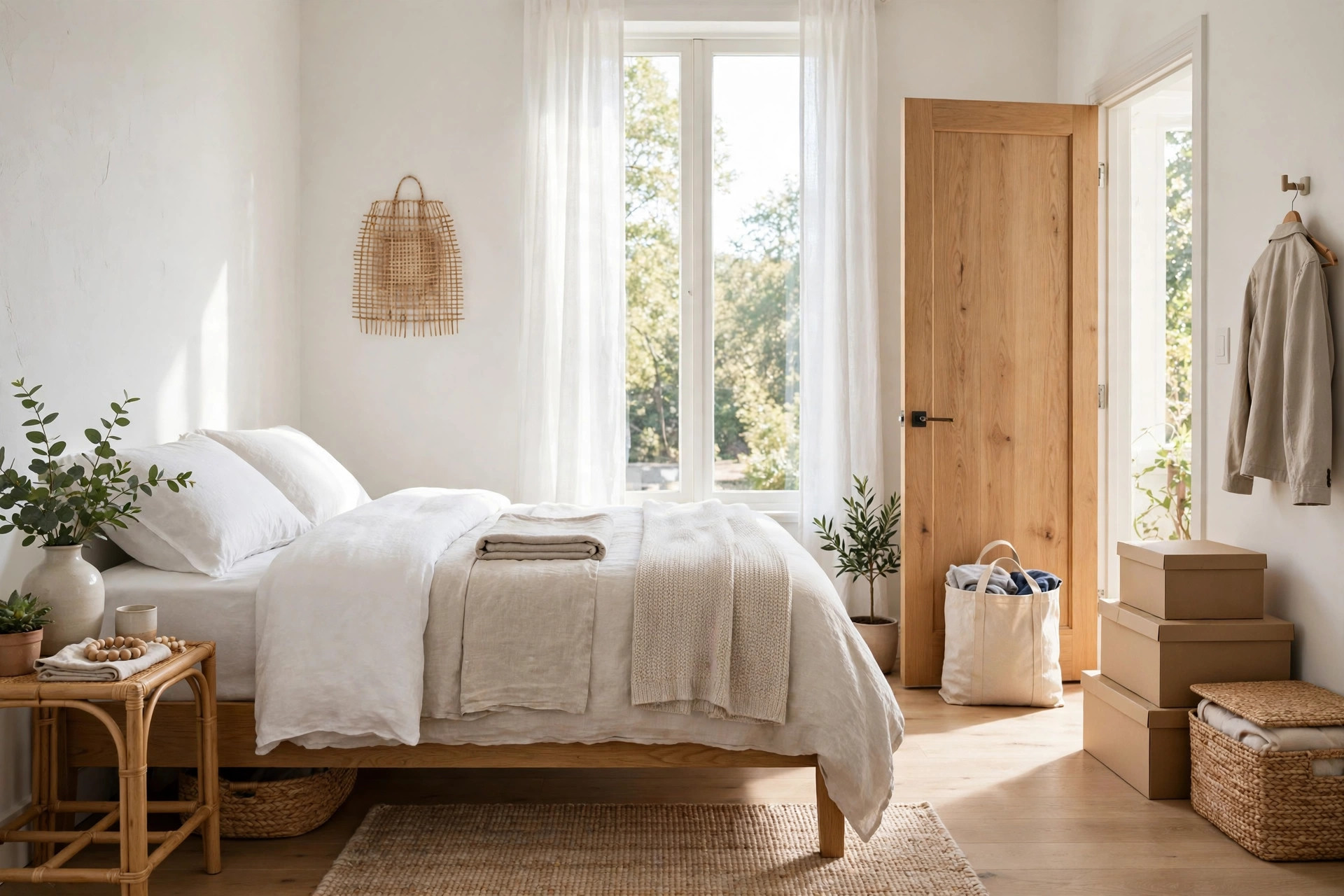
Second, make the guest space sleepable without remodeling. Certified professional organizer Mary Jo Contello, owner of Organized by MJ, advises clearing the desk and putting away work papers and mail, emptying one drawer and some hanging space for guests, and leaving a clear path to the door. That is the whole job: a clear surface, a little empty storage, and a path to the door. See also our holiday hosting declutter guide.
Third, control new toy intake with a one-in, one-out rule. For each new toy, one existing toy is donated or passed on. See also our kids toy organization guide.
This is organizer advice, and the reason intake matters is real: Circana reports the US toy industry returned to growth in 2025 after two years of stagnation and decline. Total annual dollar sales grew by 6 percent, average selling price rose 4 percent and units sold increased 3 percent for the full calendar year 2025 versus 2024. Growth was driven by a rebound in unit demand and consumer appetite for higher-priced and licensed toys. Six of the 11 supercategories tracked by Circana posted dollar growth, led by Games and Puzzles, up 37 percent in dollar sales. Compared with 2020, total US toy sales are now up 16 percent. New toys keep arriving, so a rule for what leaves matters as much as a rule for what comes in.
Fourth, store keepsakes and decorations cool, dry and off the floor. The National Archives guidance for family papers and photographs is to keep the temperature below 75 degrees Fahrenheit and the relative humidity below 65 percent, and to store items out of damp basements, garages and hot attics, on a shelf so they do not get wet, and away from sources of leaks and floods. Cooler temperatures slow chemical decay and reduce insect activity. See also our guide on how to store Christmas decorations.
Do not overdry: relative humidity below 15 percent can cause brittleness, so drier is not always better. Use containers made of board or folder stock that is lignin-free and acid-free or buffered, and stable plastics such as polyester, polypropylene or polyethylene for photographs and papers. Home organizer Lauren Saltman adds one practical point: keep candles in the house, not the attic or garage.
Fire safety checks before anything goes up
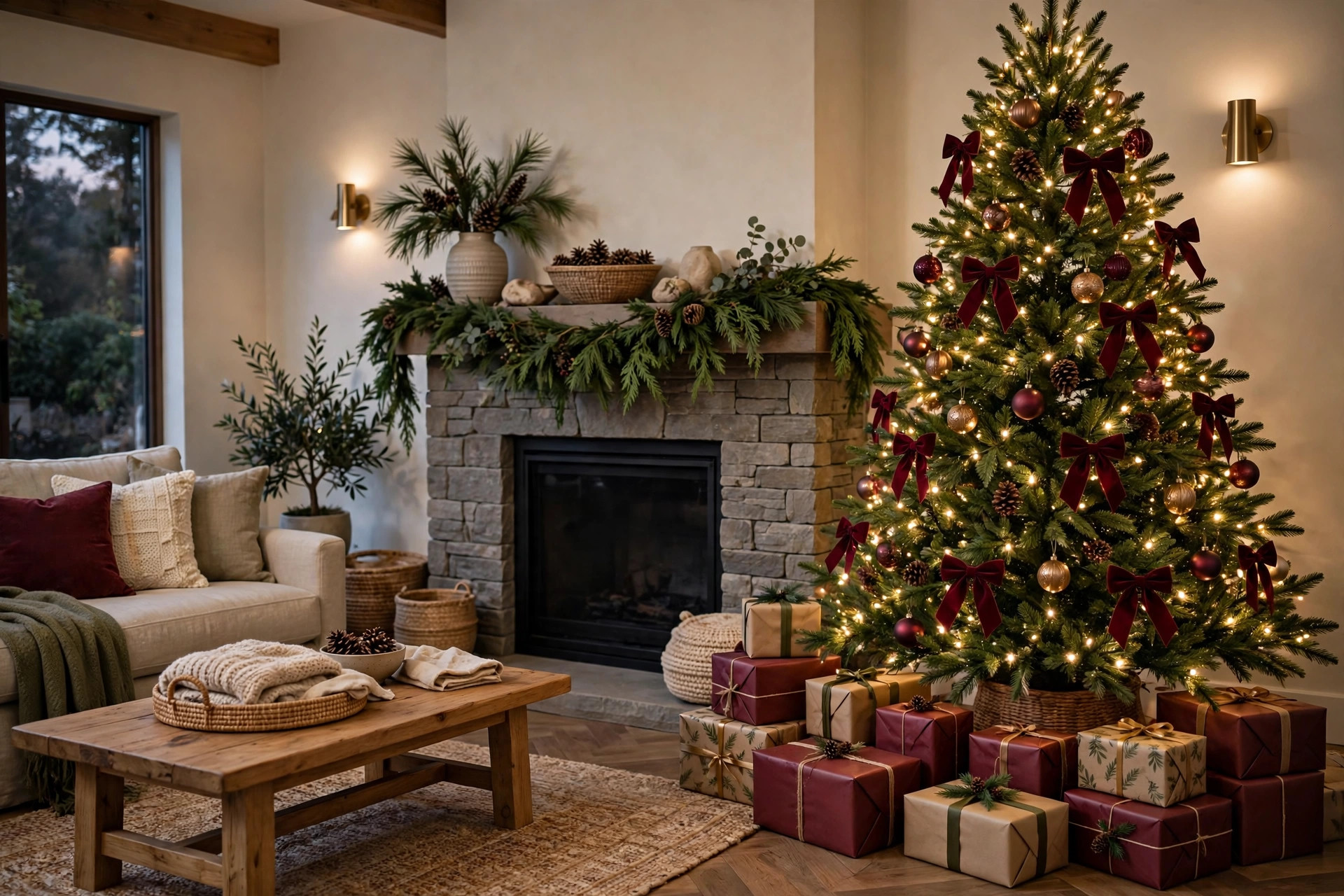
The US Fire Administration's holiday guidance is short and worth following in full. Water your Christmas tree every day, because a dry tree can catch on fire easily. Keep your tree at least 3 feet away from heat sources like fireplaces, radiators, space heaters, candles and heat vents. Always unplug Christmas tree lights before going to bed or leaving your home.
For candles, keep them at least 12 inches away from anything that burns. Use stable holders and place them where they cannot be knocked down easily. Consider using battery-operated flameless candles, which can look, smell and feel like real candles. Blow out candles when you leave a room or home, or when you go to bed. Do not use lit candles in bedrooms, bathrooms and sleeping areas.
Nearly half of holiday decoration fires happen because decorations are placed too close to a heat source, the US Fire Administration says, matching the NFPA figure of 47 percent. Keep the distance, check the lights, water the tree, and the season stays a celebration rather than a call to the fire department.
Frequently Asked Questions
How much does the NRF forecast for holiday sales in 2026?
NRF forecasts retail sales in November and December 2026 will grow 4.2 percent over 2025, to total spending of $1.013 trillion. It is a forecast published 15 October 2026, not observed spending. Last year's holiday sales totaled $972 billion, up 3.1 percent over 2024.
How much do Americans plan to spend on gifts this year?
Americans planning to buy gifts expect to spend $879 on average, down 21 percent from $1,107 on average in 2025, according to NerdWallet's 2026 Holiday Spending Report. 82 percent of Americans plan to buy gifts. Total expected spending for holiday spenders is $2,525 on average, covering gifts, travel and other holiday expenses. These are planned figures from a Harris Poll survey of 2,060 US adults conducted 8 to 10 September 2026.
How many home fires start with decorations each year?
As an annual average between 2020 and 2024, US fire departments responded to an estimated 835 home structure fires that began with decorations, excluding Christmas trees, resulting in three deaths, 29 injuries and $18 million in direct property damage. Christmas tree fires are counted separately, at an average of 143 a year. Nearly half of decoration fires, 47 percent, happened because decorations were too close to a heat source.
How far should decorations and trees be from heat?
Keep candles at least 12 inches away from anything that burns, and keep your Christmas tree at least 3 feet away from heat sources like fireplaces, radiators, space heaters, candles and heat vents. Water the tree every day, inspect light strands each year and throw away any with frayed or pinched wires, and always unplug tree lights before going to bed or leaving your home.
How should I store family papers and photographs?
Keep them below 75 degrees Fahrenheit and below 65 percent relative humidity, out of damp basements, garages and hot attics, stored on a shelf off the floor and away from leaks and floods. Do not let humidity fall below 15 percent, because very low humidity can cause brittleness. Use containers made of lignin-free and acid-free or buffered board or folder stock, and stable plastics such as polyester, polypropylene or polyethylene.
What is the one-in, one-out rule for toys?
For each new toy, one existing toy is donated or passed on. It is organizer advice, not a research finding. The reason it matters is that US toy unit sales rose 3 percent in full-year 2025 versus 2024, according to Circana, so new toys keep arriving and something has to leave to keep the total under control.
Sources: National Retail Federation, "NRF Forecasts 2026 Holiday Sales Growth as Consumers Remain Resilient", 15 October 2026; NerdWallet, "2026 Holiday Spending Report", updated 13 October 2026; National Fire Protection Association, "December among leading months of the year for U.S. home fires", 4 December 2025, updated 18 December 2025; US Fire Administration, Winter Holiday Fire Safety flyer, Candle Fire Safety page and Holiday Fire Safety Pictographs; US National Archives and Records Administration, "How to Preserve Family Archives (papers and photographs)"; Circana, "U.S. Toy Industry 2025: Sales Up 6% as Pokemon Tops $2.5B", 3 February 2026. Checked against the issuing organisations' own pages on 8 November 2026.