How to Declutter Your Clothes: A Closet Cleanout That Sticks

Learning how to declutter clothes is one of the fastest ways to make your whole home feel calmer. Clothes pile up silently — the jeans that almost fit, the "nice" top you've never worn, the drawer of single socks — until opening the closet feels like a chore instead of a choice. This guide walks you through a closet cleanout method that actually lasts: how to choose your approach, honest criteria for each item, what to do with the "maybe" pile, where everything goes afterward, and the small habits that keep clutter from creeping back. No guilt about past purchases, no judgment about what your closet looks like right now. Just a clear, doable plan.
Full Pull-Out vs. Section-by-Section: Pick Your Approach
There are two classic ways to start, and the right one depends on your schedule, your space, and your decision-making energy.
The Full Pull-Out
This is the dramatic version: every item of clothing comes out of the closet and dressers and lands on the bed. It forces honest decisions because nothing can hide in a dark corner. It works best if you have a solid block of time (three to four hours) and the stamina to finish in one session — quit halfway and you're sleeping on a pile of laundry, so only choose this if you can commit to finishing.
Section-by-Section
Go one zone at a time: hanging tops today, the dresser tomorrow, shoes on the weekend. It's slower, but far less overwhelming, and the smarter choice if you have limited time or a closet that sends you into decision fatigue. Start with the easiest category (socks and underwear, where decisions are quick) to build momentum for the harder ones (the jeans drawer, the sentimental pieces).
Either approach works. Pick the one you'll actually finish.
Before You Begin: Set Up Your Sorting Zones
Before touching a single hanger, grab four containers — boxes, bags, or labeled floor spots — and set up these stations:
- Keep — items you wear regularly and love.
- Maybe — items you're genuinely unsure about.
- Donate/Sell — good-condition items someone else could use.
- Recycle/Trash — worn-out pieces headed for textile recycling or the bin.
Having the stations ready means every decision has a destination. Keep a trash bag handy for the obvious stuff (mismatched socks, underwear past its prime) and a timer if you like working in focused bursts.
The Try-On Test: Three Questions That Cut Through the Noise
For anything you're not sure about, try it on. Stand in front of a mirror and ask three questions:
- Does it fit me right now? Not "might fit next summer." Right now. If it's uncomfortable to sit, stand, or move in, it doesn't fit, no matter what the tag says.
- Is it in good condition? Check for pilling, stretched necklines, faded knees, broken zippers, and mystery stains. A small repair you will actually do is fine; a "to mend" pile you've ignored for a year is a decision in disguise.
- Would I buy it again today? Imagine seeing it in a store at full price. Would you reach for it, or walk past? This question quietly kills the guilt over past purchases — the money is already spent either way. The only question is whether the item earns its place in your life going forward.
If the answer to all three is yes, it goes back. If any answer is no, it's leaving — and that's a gift to your future self, not a failure.
Handling the "Maybe" Pile Without Letting It Win
The maybe pile is where closet cleanouts go to die. Tame it with three rules:
- Cap it. Allow yourself one box or one shopping-bag-sized maybe pile, no more. A limit forces faster, better decisions.
- Set a date. Give every maybe item a 30-day window. Stash the box somewhere visible — a guest room corner, not the back of the closet.
- Test real life, not theory. If you reach for an item during those 30 days, it stays. If the box sits untouched, donate it unopened. Opening it again just restarts the debate.
Be honest about what lands in the maybe pile. "I might wear this to a fancy event someday" is usually a no wearing a costume. Keeping one special-occasion outfit is reasonable; keeping twelve "just in case" dresses is storage, not a wardrobe.
Where Everything Goes: Donate, Sell, Recycle, Trash
Once decisions are made, move items out quickly — bags sitting in the hallway for weeks have a way of migrating back into drawers. Aim to get every outgoing bag out of your house within a week. Momentum matters more than perfection.
Donate
Clean, good-condition clothing goes to local thrift stores, shelters, or clothing drives. Many also accept shoes, belts, and bags. Check donation hours and restrictions before you load the car.
Sell
Worth the effort for brands, like-new pieces, and items with tags still on. Online resale platforms and local consignment shops work well; a neighborhood swap can clear volume fast. Price things to move — your goal is an empty bag, not maximum profit.
Recycle Textiles
Stained, torn, or threadbare items shouldn't go in donation bins, where they become someone else's sorting problem. Many retailers and municipalities run textile recycling programs that turn worn fabrics into insulation, rags, or new fibers. Search your city plus "textile recycling" to find a drop-off near you.
Trash
Genuinely unusable items — ruined underwear, single socks, broken accessories — go in the trash. Letting them go without a ceremony is fine.
Organizing What Stays
A smaller wardrobe still needs a system, or the clutter returns within a month.
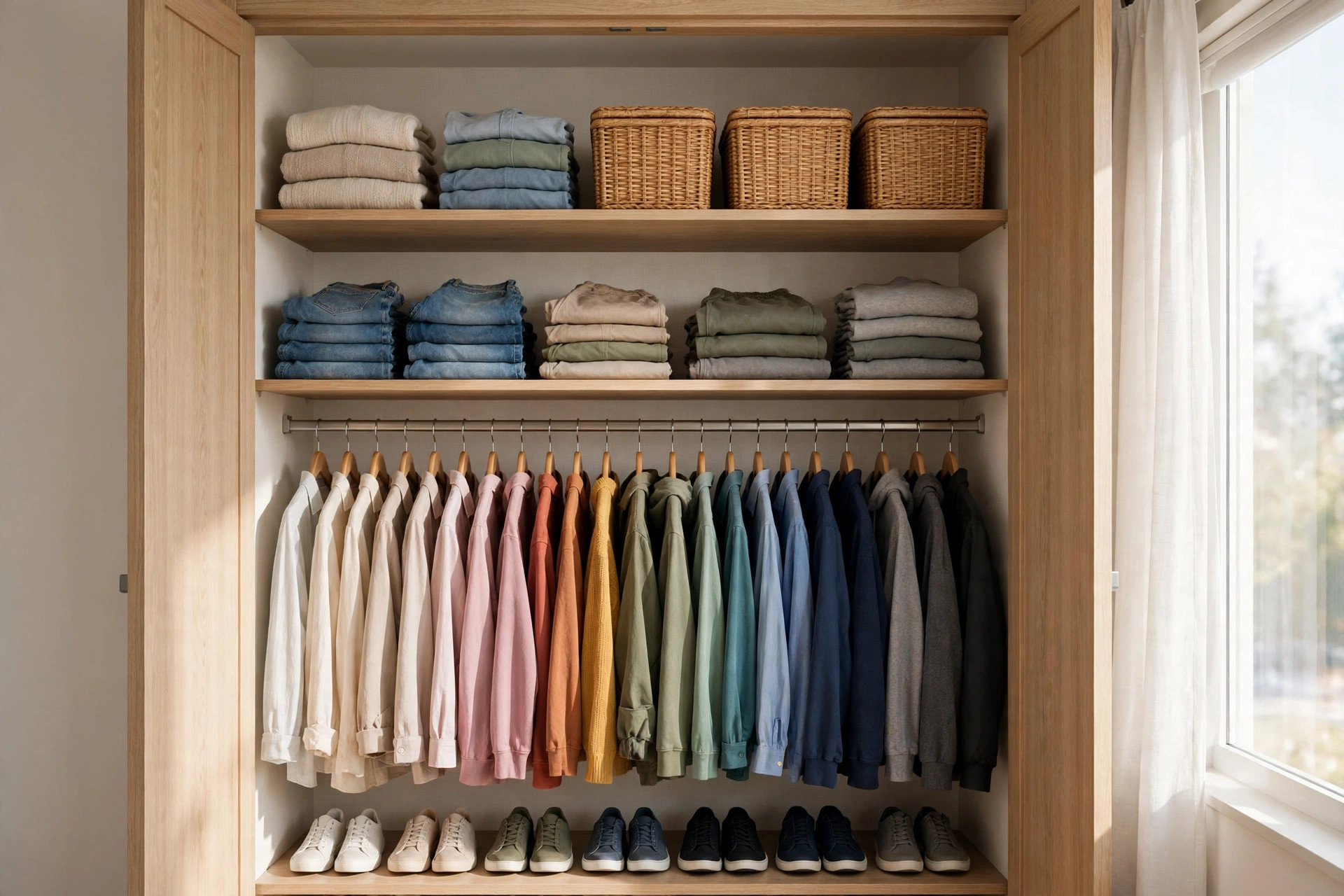
- Group by category, then by color. Hang shirts together, pants together, dresses together — then arrange each group from light to dark. You can see everything at a glance, and getting dressed gets faster.
- Use one hanger type. Matching hangers instantly make a closet look tidier and take up less rod space than a mixed jumble of plastic, wire, and bulky wooden ones.
- Fold what's foldable. Knit sweaters, tees, and jeans do better folded on shelves or in drawers than stretched on hangers. The file-fold (standing items upright like files) lets you see every item without digging.
- Give everything a home. Shoes on a rack, accessories in a tray, workout clothes in one drawer — putting things away takes seconds instead of decisions.
Habits That Keep the Closet Clutter-Free
The cleanout is the event; the habits are the maintenance. Five keep your closet from refilling:
- One in, one out. Every new item that enters means one leaves. It turns every purchase into a tiny decluttering moment and makes you think twice at the checkout.
- Do a seasonal mini-purge. Twice a year, when you swap seasonal clothes, spend 20 minutes pulling anything you didn't wear. It's quick because the closet is already in your hands.
- Keep a donation bag going. Hang a bag on the closet door. When you notice something you no longer reach for, drop it in instead of waiting for the next big cleanout.
- Try it on in the store. Most closet clutter starts as a fitting-room skip. If you can't try it on, buy from places with easy returns and actually use them.
- Shop your closet first. Before buying something for an event or a season change, look through what you own. You'll be surprised how often the "perfect" piece is already hanging there.
Frequently Asked Questions
How long does it take to declutter clothes?
A full wardrobe cleanout typically takes three to six hours in one go. Section-by-section, plan on 30 to 60 minutes per category over a week or two. Getting outgoing bags out of the house the same week is what makes it stick.
What should I do with clothes that don't fit anymore?
If they no longer fit and you're holding them for a "someday" body, let them go. Keep a small number of transitional sizes only if you genuinely wear them in rotation.
How do I declutter sentimental clothing?
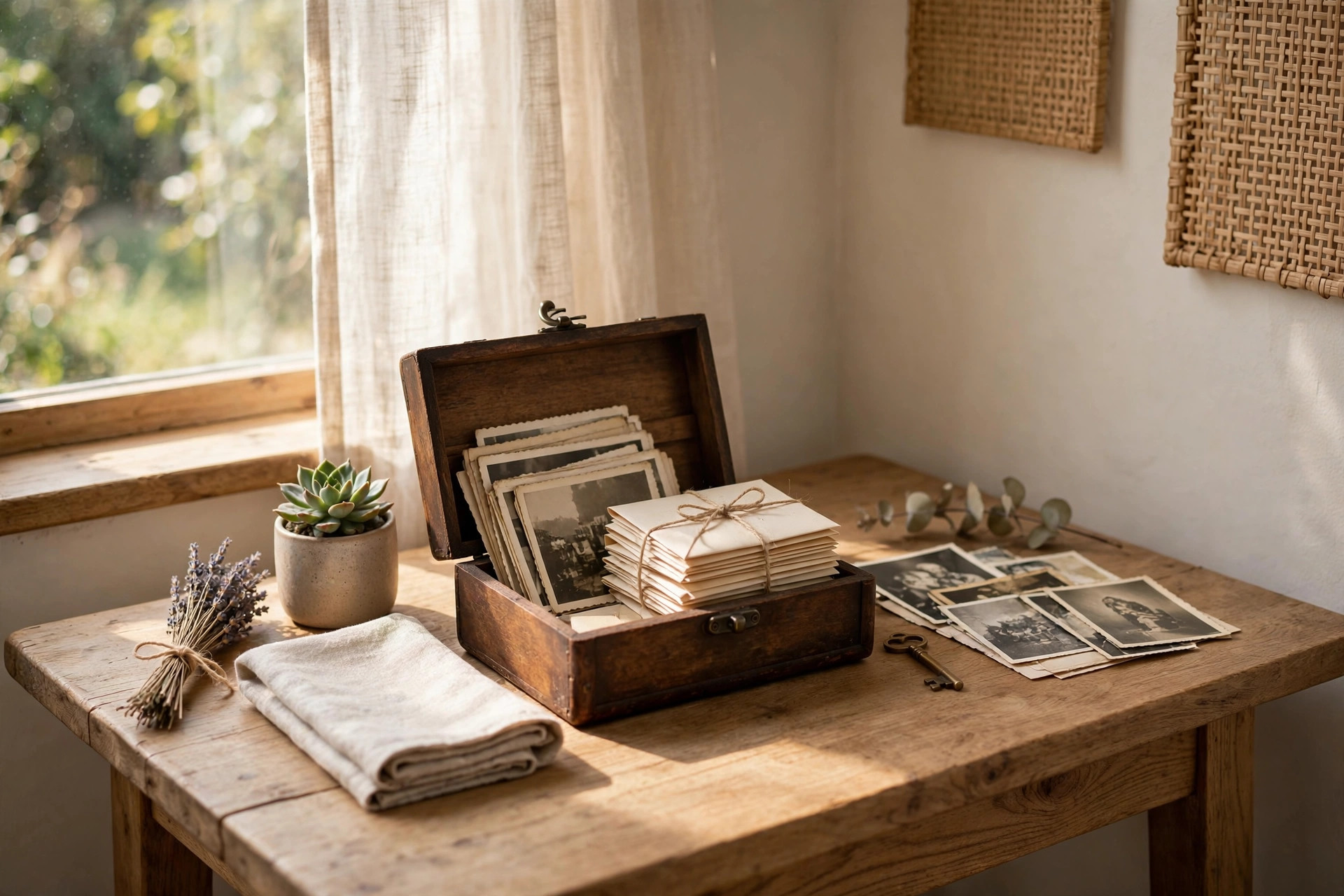
Limit keepsakes to one memory box. Keep the concert tee or the sweater from a loved one that truly matters, photograph the rest, and let the items go. The memory lives in you, not in the fabric.
Should I declutter my clothes all at once or a little at a time?
Whichever you'll finish. All at once is faster and more decisive; a little at a time is less overwhelming. If decision fatigue hits hard, switch to section-by-section.
How often should I declutter my closet?
A deep cleanout once a year plus a quick seasonal mini-purge is plenty. If you follow one-in-one-out, your closet largely maintains itself between purges.